
Original reporting: Associated Press
By: Sarah Rankin and Claudia Lauer
Published: August 2026
Original headline: “Surveillance tech company Flock announces platform changes amid public backlash”
The high points
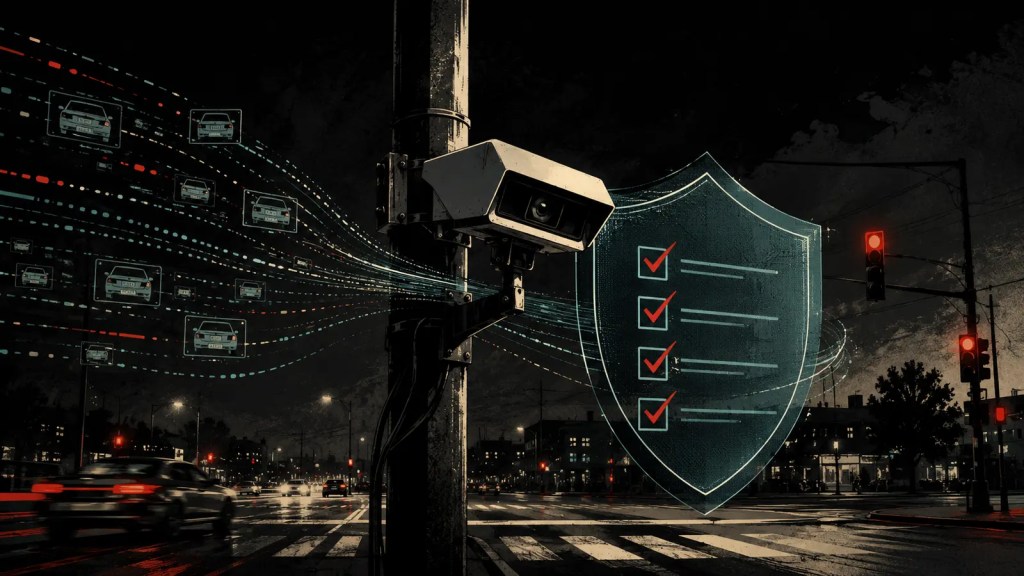
- Flock says law-enforcement customers will have to use an audit tool designed to flag abnormal searches and lock users out pending review.
- The standard retention window is set to shrink from 30 days to seven, while evidence connected to a case may be preserved longer.
- Searches will need to be tied to a case code; emergency overrides will be flagged, and agencies may limit what types of outside searches their data supports.
Our take
These are meaningful concessions because they acknowledge what critics have said all along: a nationwide plate-reading network creates predictable opportunities for curiosity searches, stalking, mission creep and cross-agency misuse. Seven days is better than 30, and a real case number is better than a blank justification field.
But the central problem remains. The people operating the surveillance system still largely decide when the system may be searched, and many safeguards remain company-designed or agency-administered. Public law—not a vendor’s terms of service—should set the floor. That means narrow authorized purposes, short retention, independent audits, public reporting, meaningful penalties and judicial approval when officers want to reconstruct someone’s movements.
Why it matters
Flock’s retreat shows public pressure works. It also shows why communities should treat product updates as the beginning of oversight, not the end of it.
Video package
Hook: Flock just cut its default data retention from 30 days to seven. Is that privacy—or damage control?
Short script: Flock Safety is adding mandatory audit tools, case-number requirements and a seven-day default retention window after growing backlash over license-plate surveillance. Those are real improvements. But police agencies still control most searches, and internal review is not the same thing as a warrant or independent oversight. The lesson is simple: privacy rights should not depend on which settings a surveillance company chooses this year. Cities need enforceable rules, public audits and judges in the loop.
Who’s Watching Who? summarizes and comments on reporting published elsewhere. Facts attributed to the original outlet remain that outlet’s reporting; our analysis is clearly labeled. Follow the source link for the full context.
 Who's Watching Who?